5 Tips for Designing an Effective Business Card
Despite the digital momentum pushing the business world toward paperless solutions, one relic of the past remains a powerful, essential tool: the business card. Your customers are in a hurry; they want a simple, reliable way to connect with a trusted professional who can help them solve their problem. In fact, research shows that for every 2,000 cards distributed, a company’s sales can increase by 2.5%, proving these small tools drive real growth.
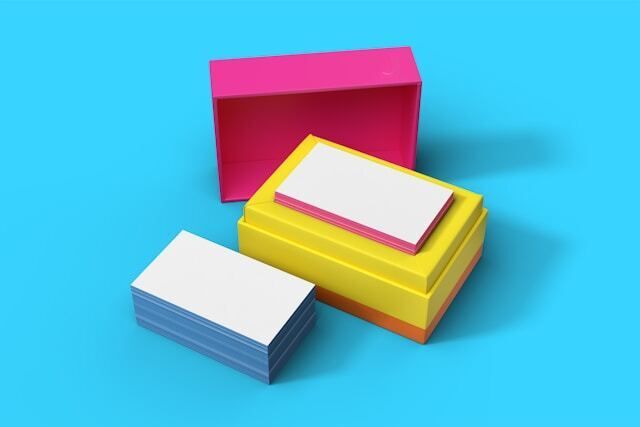
However, if you want your card to be effective and turn into sales, you must design it with the customer's clarity in mind, not your creativity. For instance, consumers retain a colored card nearly 10 times longer than a standard white one, a clear sign that intentional design helps you avoid the risk of being forgotten.
Here are five simple design tips to ensure your card is a clear, compelling Call to Action for your customers.
1. Keep it simple.
When designing a business card, resist the urge to go overboard with ideas in an attempt to stand out. This impulse, combined with a desire to include too much information, results in a card that is visually overwhelming and fails to resonate with the average person. In the age of instant gratification, your card must communicate swiftly and clearly. To achieve this, adopt a minimalist approach: Keep the design simple, professional, and highly readable. Stick to a maximum of one to three colors, employ clean aesthetics, and commit to including only the most critical information.
2. Make it legible.
Legibility is Non-Negotiable. While striving for creativity, many businesses overlook the fundamental purpose of a business card: to be easily read. This simple truth that someone actually has to be able to read it is often forgotten. Choose fonts that are professional, simple, and universally readable. Critically, ensure your text is sized at 10-point minimum to prevent straining the reader's eyes. Anything smaller or more complicated will take extra time to decipher, risking the card being quickly discarded. Even in this digital age, a well-designed business card remains a powerful marketing tool. Keep these essential tips in mind to maximize its effectiveness and help grow your business.
3. Include the essentials.
Focus on the essentials: your name, title, company, address, phone, email, and website. To maximize utility and keep the physical card clean, integrate a QR code. This code should link to a richer digital experience, such as a digital business card (vCard), your full company website, or a specific limited-time offer. When designing your card, apply a strict test: is this piece of information absolutely pertinent to the consumer's immediate next step? If not, it belongs behind the QR code.
4. Use a bold design.
While keeping it simple, don’t be afraid to also use a bold design. It’s perfectly fine to incorporate unique colors or design ideas. By stepping outside of the box, you might actually catch someone’s attention and help turn the business card into a sale. For instance, try a nontraditional shape of the card, a textured paper or embossed lettering. Simple design features like these can make your card stand out from the pile, without over-complicating the process. And of course, remember to keep the bold design as simple as possible.
5. Have a large logo.
What’s the most important piece of information someone needs to receive from the business card? The business, of course! Grab people’s attention by making your logo the largest design element of the card. To keep it simple, use your logo as the basis for the entire design. How can the card work around the logo? What colors or design features complement the logo? By keeping these design pointers in mind, you can ensure anyone who sees the card will walk away remembering the business by the logo.
If you need more than a business card, we can create a corporate identity package that includes a coordinated system of business cards, letterhead, and envelopes. Call us or stop in, and we’ll get down to business, or click here to order now.